
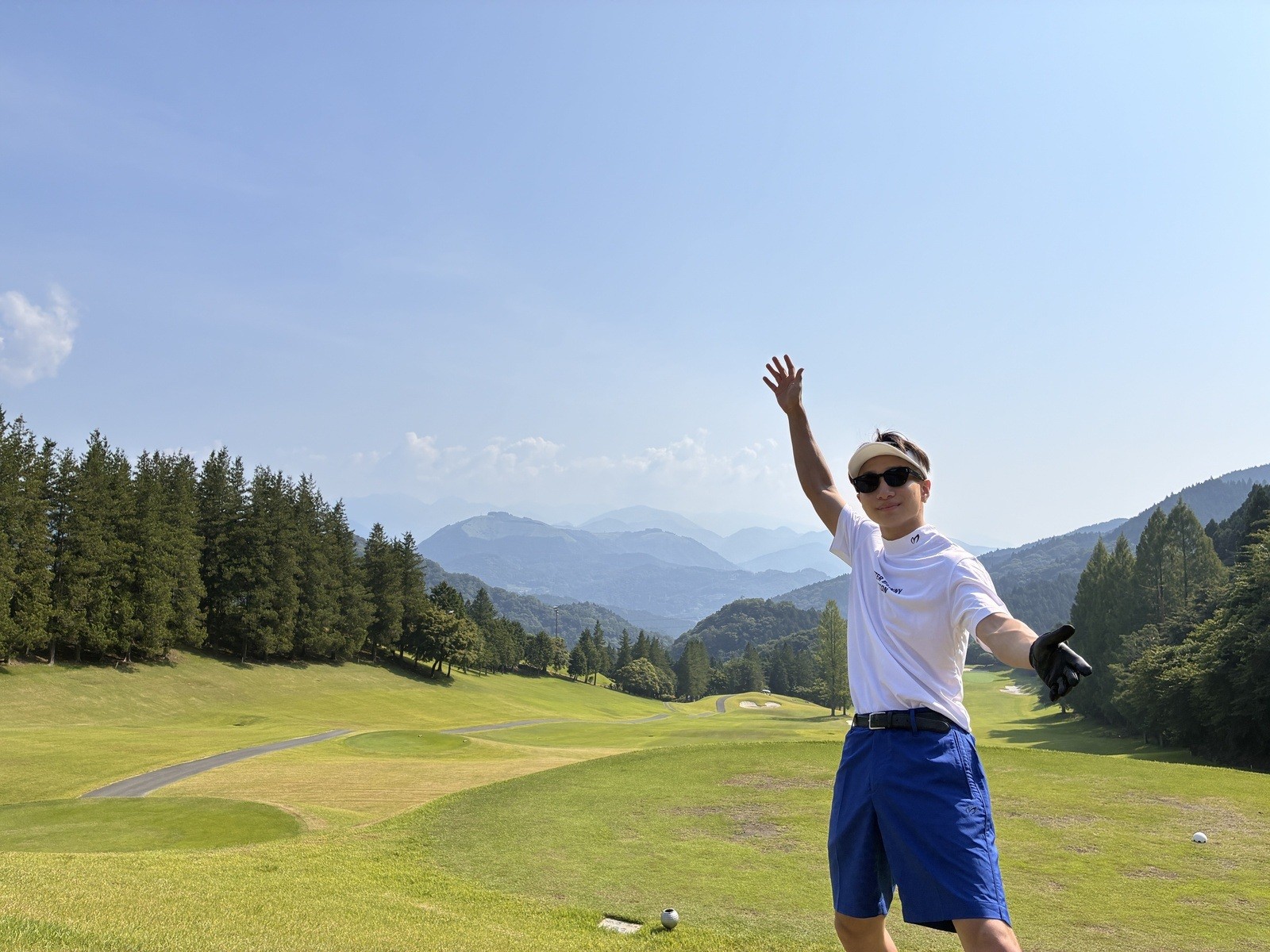
Hello, this is Golf-Otto. On August 2, 2026, our family returned to Olympic National Golf Club Sakawa Course in Kanagawa Prefecture for the first time in quite a while.
After a long period of renovation, a warm and inviting wooden refreshment hut now stands on the course. Along with stone lanterns, possible views of Mount Fuji, and the OUT course’s unusual hole configuration, we found plenty to remember beyond the golf itself.
- About 4°C cooler
than the city - A new hut built with
trees from the course - Three par 3s, 4s and 5s
on the distinctive OUT
25°C at 7 a.m. and Nearly 30°C by Noon—Still About 4°C Cooler Than the City
At around 7 a.m., the temperature at Sakawa Course was 25°C (77°F). The morning felt relatively comfortable, although it climbed to nearly 30°C (86°F) by midday. Even then, it was about 4°C (7°F) cooler than the city—a welcome difference during a midsummer round.
There was not much wind that day, so it still felt quite hot in direct sunlight. Do not let the cooler location create a false sense of security: bring plenty of water, wear a hat, and use sun protection just as you would at a lower-elevation course.
A Warm Wooden Refreshment Hut on Our Return Visit
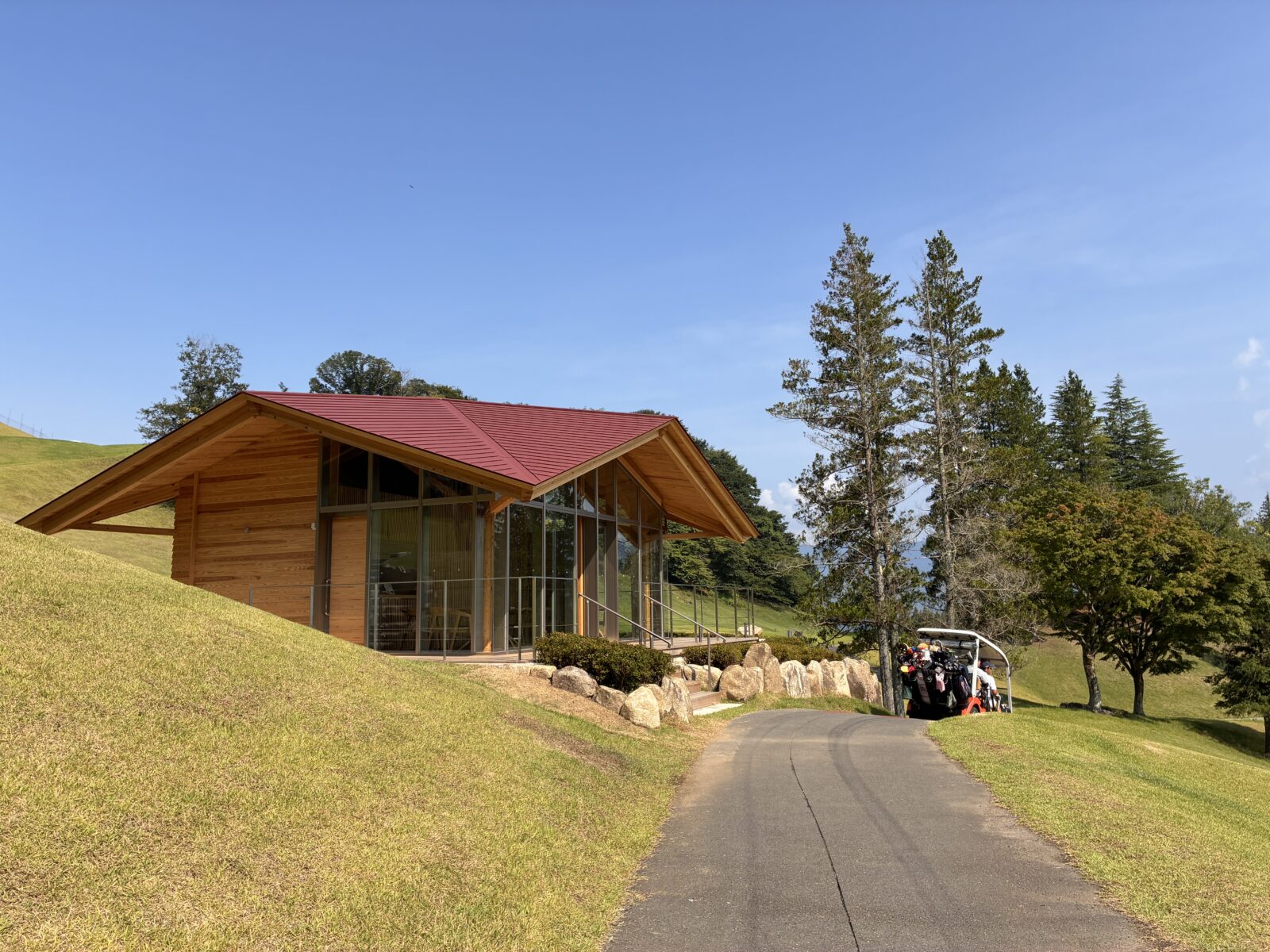
Sakawa Course had been undergoing major renovations for quite some time. On this return visit, one of the biggest surprises was the newly completed refreshment hut.
The generous use of timber gives the building a warm yet uncluttered appearance. Its red roof contrasts beautifully with the green turf, while the structure itself fits naturally into the landscape.
The building was complete, but it had not yet opened when we visited, and drinks were not being sold. We look forward to the day it begins operating as a comfortable place to pause during a round.
From Course Trees to a Building: The Story Behind the Sustainable Hut
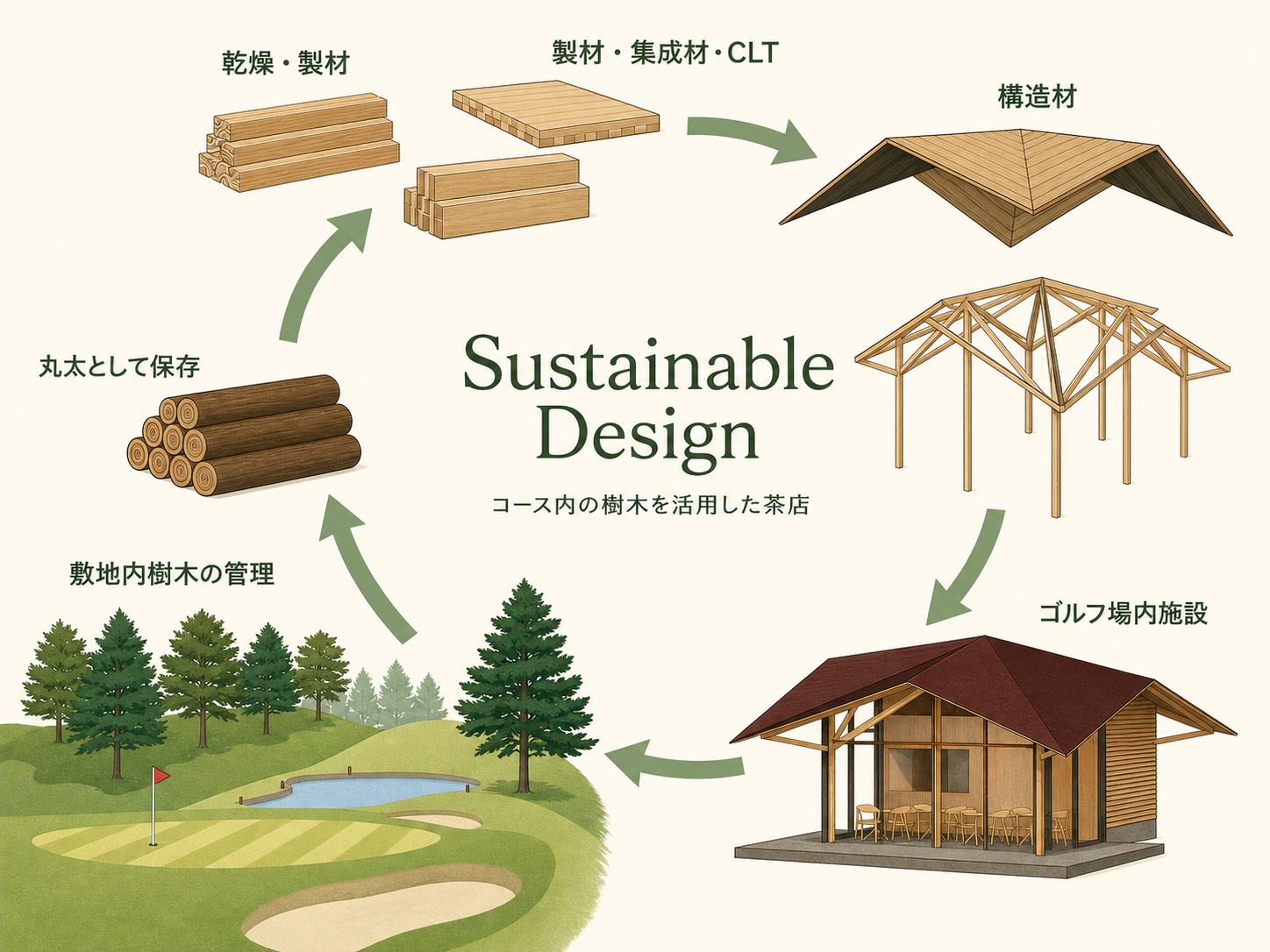
What makes the hut even more appealing is the idea behind its construction. According to the on-site “Sustainable Design” panel, it was built using trees managed and felled on the course itself.
The timber was milled and processed into lumber, glued laminated timber, and cross-laminated timber (CLT), then used for the structure as well as interior and exterior finishes. Instead of discarding trees grown on the property, the project gave them a new role in the course’s facilities.
This was more than a simple replacement building—it was a thoughtful way to keep local resources in circulation. Although the hut had not yet opened, learning the story behind its timber made us look forward to its opening even more.
Golf-Otto’s highlight: The appeal lies not only in the hut’s design, but also in imagining that its wood may once have stood somewhere on the course. When you visit, take a look at both the building and its information panel.
Stone Lanterns and Mount Fuji: Scenery Rich in Japanese Character
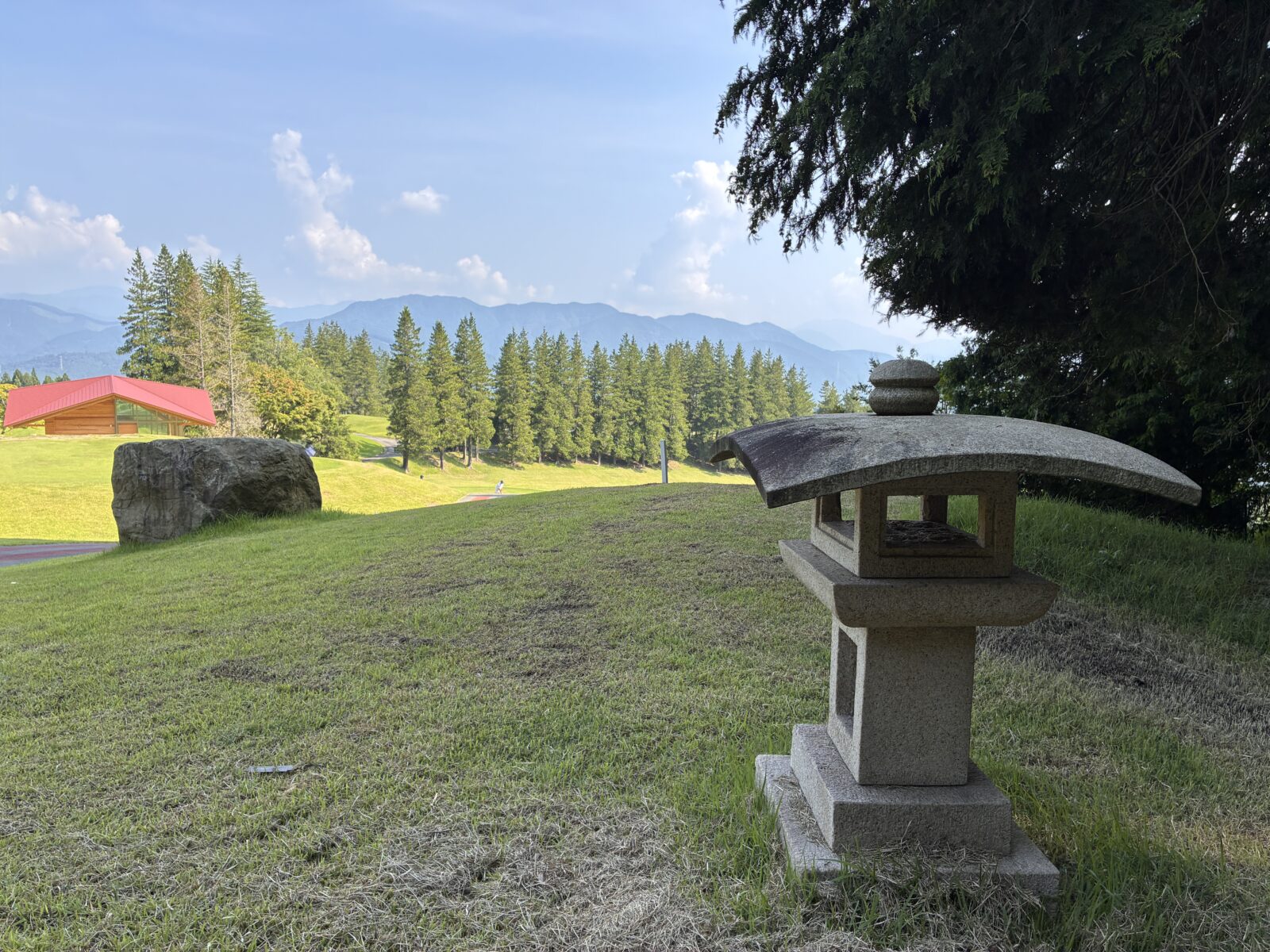
As you make your way around the course, stone-lantern-style features appear at key locations. Set quietly among the turf, trees, and mountains, they lend the entire course a calm Japanese atmosphere.
When the weather cooperates, Mount Fuji can also be seen from several points around the course. A stone lantern standing against the green landscape with Mount Fuji beyond it creates a distinctly Japanese scene—and one of Sakawa Course’s special attractions.
Unfortunately, clouds hid Mount Fuji during this visit. Even so, the open view toward the mountains was impressive. Seeing the lanterns and Mount Fuji together on a clear day is something we can look forward to next time.
Three Par 3s, Three Par 4s and Three Par 5s on the OUT Course
One of the most interesting playing features is the composition of the OUT course. A typical nine often has two par 3s, five par 4s, and two par 5s. Sakawa’s OUT, however, has an unusual three par 3s, three par 4s, and three par 5s—a distinctive “3-3-3” layout.
| Hole Type | Typical Nine-Hole Example | Sakawa OUT |
|---|---|---|
| Par 3 | 2 holes | 3 holes |
| Par 4 | 5 holes | 3 holes |
| Par 5 | 2 holes | 3 holes |
Par 3s change the sense of distance and target, par 4s invite careful planning, and par 5s require a series of decisions over a longer hole. Having the same number of each means the mood and strategy keep changing throughout the nine.
You find yourself wondering how to approach the next hole, which makes the variety especially enjoyable. For golfers who appreciate the character of individual holes rather than focusing only on the score, this OUT course should leave a lasting impression.
What We Enjoyed About Sakawa Course
Returning to Sakawa Course after some time away, we found that it had gained new appeal while preserving its natural setting and calm atmosphere.
The summer climate was cooler than the city, the new hut made creative use of timber from the course, stone lanterns brought Japanese character to the landscape, and Mount Fuji remained something to hope for on a clear day. Add the OUT course’s three par 3s, three par 4s, and three par 5s, and these elements come together to create Sakawa’s distinctive personality.
For golfers in their fifties and beyond, a round can be about more than simply moving quickly from one shot to the next. It is also worth taking time to appreciate the scenery, facilities, and course design. In summer, prepare carefully for the heat, then enjoy the landscape and look out for the refreshment hut as it moves toward opening.
Please note: This article is based on our round on August 2, 2026. Temperatures, course conditions, and facility operations may change. Check the golf club’s official information for the latest details before booking or visiting.